Projection has been declared finished more than once. I don’t believe it is.
I think audiences simply became tired of being shown the same experience in different rooms.
At its best, projection changed the way many people encountered art. Images moved beyond the screen or frame and took over entire spaces. Audiences could walk through colour, sound and movement rather than observe them from a distance.
For many, these experiences offered an accessible way into art. They did not require specialist knowledge or an understanding of art history. People could enter, respond and decide for themselves what the experience meant.
That mattered, and it still does.
The problem was not projection. It was what happened when a successful creative format became a formula.
When experimentation became a template
As projection technology became more accessible, large digital experiences began appearing in museums, galleries, warehouses and temporary venues around the world.
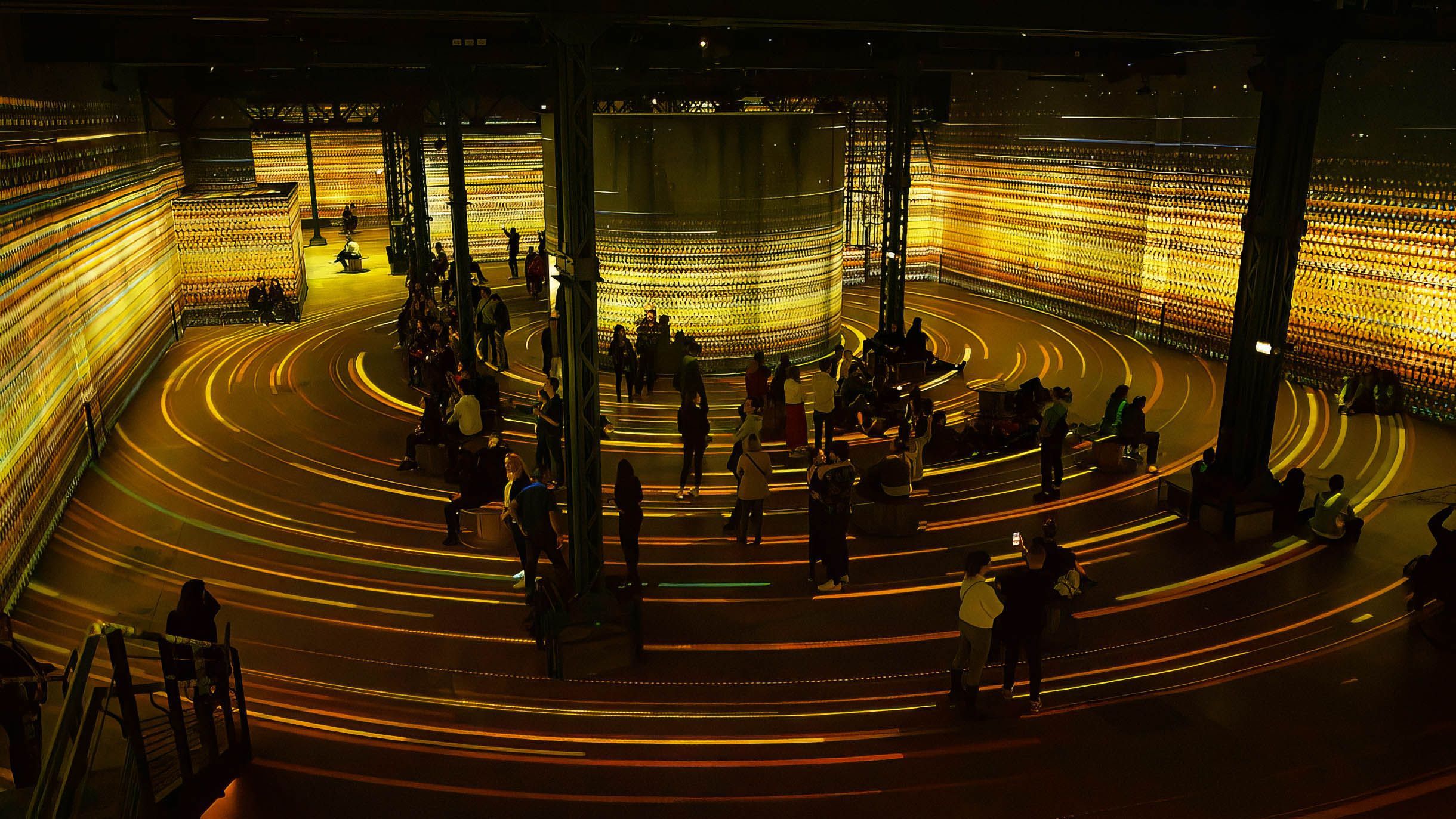
What initially felt experimental became familiar. Images moved across walls in similar ways. Music rose and fell at predictable moments. Rooms became larger and brighter, but the experiences inside them often became harder to distinguish.
The subject changed while the structure remained almost identical. A different artist, city or historical period could be inserted into the same production model.
That is where the distinction matters.
If the artist’s name can be changed without fundamentally changing the experience, the format is leading and the art is being asked to follow.
Projection is no longer being used to express an idea. The projection itself has become the idea.
Audiences recognised the pattern
Spectacle can create a powerful first impression. Scale, colour and movement capture attention immediately.
But once people have encountered several similar experiences, the effect becomes familiar. A larger image or brighter projector cannot recreate the surprise of seeing the format for the first time.
This is often described as projection fatigue. I see it differently.
People have not necessarily lost interest in projection. They have become better at recognising the difference between an experience with something to say and one built mainly around an effect.
They notice when the music feels generic. They notice when images have been stretched to fill a room without much thought about how the space is experienced. They notice when something promises a journey but delivers little beyond a sequence of impressive visuals.
They may not explain the problem in those terms. They may simply leave feeling that something was missing.
What is missing is often authorship.
Artists do more than fill the walls
An artist should not be brought in simply to provide content for a predetermined system.
Artists shape the reason an experience exists. They decide what should be revealed, what should remain unresolved and where attention should be directed. They understand when a space needs intensity and when it needs restraint.
Their choices come from the idea, not from the number of available surfaces.
This changes the questions being asked.
Not: how much of the room can we cover?
But: what does the work need?
Not: how do we keep people visually stimulated?
But: where should their attention go?
Not: which technology will look most impressive?
But: which material will express the idea most clearly?
These decisions are what separate an authored experience from a technical demonstration.
This does not mean projection-based work must be serious, difficult or stripped of spectacle. Joy, beauty and wonder all have value. A work can be immediately appealing and still have depth.
What matters is that its creative decisions feel inseparable from what the artist is trying to explore.
Projection still has somewhere to go
Projection remains an extraordinary artistic material. It can reveal details that are normally invisible, alter our sense of scale and transform familiar architecture. It can respond to a particular place or create an environment that could not exist physically.
Its possibilities have not been exhausted.
What has been exhausted is the belief that scale and novelty are enough.
The future of projection will not be secured by making images larger or adding more surfaces. It will come from artists who continue to question what the medium can do and who use it because it is right for the work.
Some of the most powerful projection pieces I have encountered were not the loudest or most technically elaborate. They understood when to overwhelm and when to hold back. The technology was sophisticated, but it never asked to be admired for its own sake.
Projection was not the problem.
The problem was expecting the image to do all the work.